
සමූහ මිනීවළවල් තුළ සත්යය සහ යුක්තිය සෙවීම
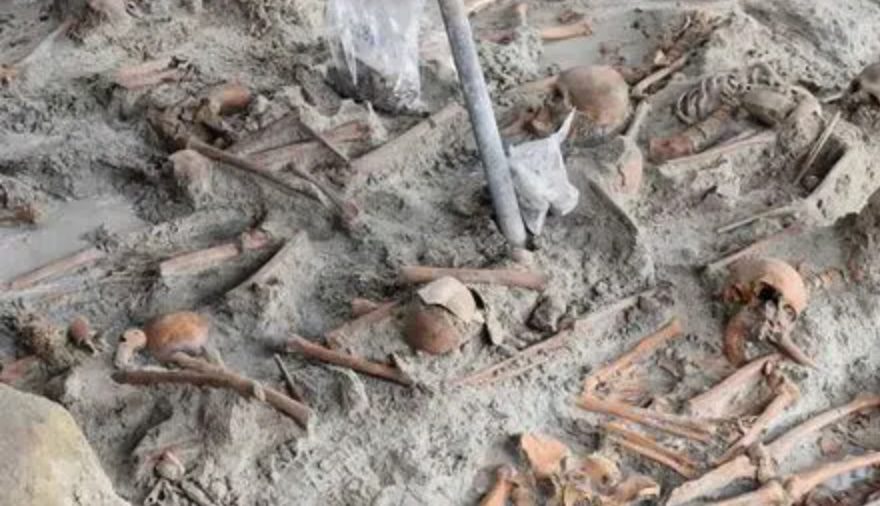 Photo: Colombo Telegraph
AI summary · 2 min read
2 min readFrom 1 outlets- Colombo Telegraph reports that more than 580 human skeletons have been recovered after months of excavation at Chemmani.
- The report by Professor Raj Somadeva reportedly finds the site resembles a formal cemetery, but says evidence is insufficient to determine how or under what circumstances the burials occurred.
- Colombo Telegraph says the findings differ substantially from two earlier interim reports and have prompted concern among Tamil political parties, civil society groups and families of missing people.
- The article revisits the unresolved Mannar mass grave inquiry, where some samples were dated to about 600 years ago.
Colombo Telegraph reports that months of excavation at the Chemmani mass burial site in northern Sri Lanka have yielded more than 580 human skeletons. It says a report by forensic archaeologist Professor Raj Somadeva concluded that the site more closely resembles a formal cemetery than a clandestine burial ground marked by criminal activity or unusual burial practices.
Colombo Telegraph says Somadeva’s report also acknowledges that the available evidence is insufficient to establish the nature of the burials or the circumstances in which they took place. The outlet reports that the conclusions differ considerably from two earlier interim reports, and have caused concern and disappointment among Tamil political parties, civil society organisations and families of missing people. The article says the site has become a major public concern in the north and a test of government credibility among Tamils; it argues that scientific findings need to be accompanied by an inquiry perceived as fair, independent and transparent.
Colombo Telegraph connects the debate to the unresolved Mannar mass grave investigation, which began after a site was discovered at a construction project in central Mannar in March 2018. It reports that radiocarbon testing of some samples at a Florida laboratory indicated an age of roughly 600 years. Lawyers representing families of missing people argued, according to the outlet, that those results could not establish the age of all remains, pointing to untested material and comparatively recent objects found during excavation.
Colombo Telegraph reports that the items cited in that debate included a biscuit wrapper thought to date from the 1980s and a skeleton with its hands restrained by handcuffs. The article says the Mannar controversy illustrates the risk of drawing conclusions about an entire burial site from limited scientific evidence, and cautions that similarities between some Chemmani remains and those in a conventional cemetery do not establish that everyone buried there died naturally.
Your take
Be the first to reactDiscussion
Readers' views on this storyStory alerts
Get an email when an outlet reports something new on this story.